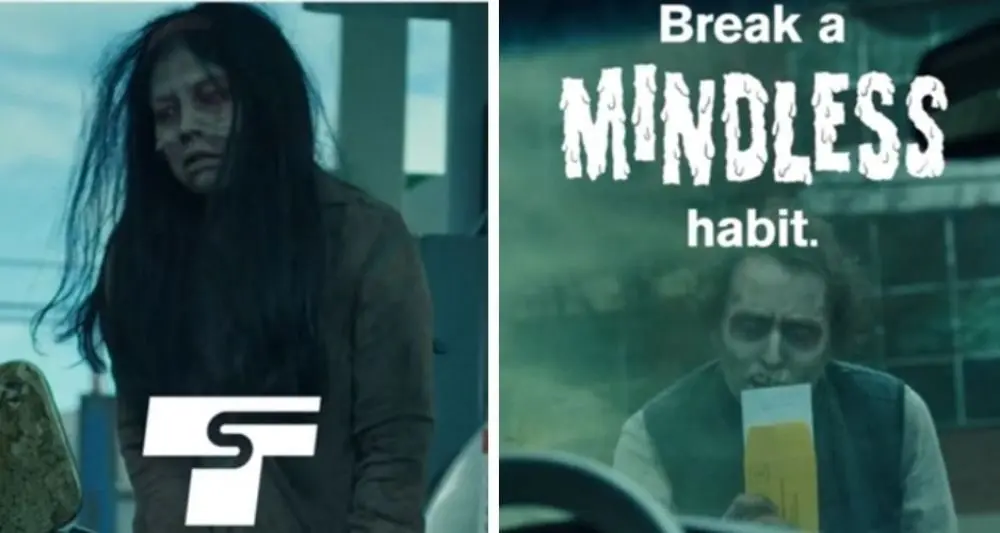
Sound Transit, already under fire for massive cost overruns, delays, and public safety concerns, is now facing backlash over a new ad campaign that portrays Washington drivers as “mindless” zombies.
The video and billboard campaign was created by Seattle-based firm Copacino Fujikado and encourages commuters to abandon their cars in favor of light rail. But critics say the messaging is wildly out of touch, especially as the agency continues to struggle with crime, service disruptions, and basic system reliability.
🧵EXCLUSIVE: Sound Transit, which is massively over budget & perpetually behind schedule, is rolling out a series of ads on May 7 calling Washingtonians "Mindless" zombies for driving
The agency is so badly run that it is $20-30 billion over budget despite gouging taxpayers pic.twitter.com/hmPlUSK6IL
— Ari Hoffman (@thehoffather) May 5, 2026
A “Zombie” Campaign Targets Drivers
The campaign leans heavily into imagery of drivers as undead commuters stuck in traffic, drained by gas prices and parking tickets.
Copacino Fujikado, the Seattle-based agency hired with taxpayer dollars for the campaign, described the concept as highlighting the “mind-numbing slog” of driving, while urging people to “break a mindless habit.” The firm’s creative director called drivers “zombies in traffic… crawling through the same soul-sucking commute,” while Sound Transit itself promoted the system as a “no brainer.”
But the campaign arrives at a time when many Washingtonians are already facing some of the highest gas taxes in the country, costs imposed by the same political ecosystem that heavily backs Sound Transit.
ST's unelected, unaccountable board has jacked the price of car tabs for years so high that over 600,000 drivers aren't paying them anymore
WA Dems levied some of the highest gas taxes in the US & call Washingtonians "mindless" for filling up pic.twitter.com/Qsn8Z1CXnD
— Ari Hoffman (@thehoffather) May 5, 2026
Mounting Costs, Declining Trust
Sound Transit is estimated to be tens of billions of dollars over budget on long-term expansion plans, while continuing to rely on high car tab fees that have sparked widespread backlash among drivers.
Hundreds of thousands of Washingtonians have reportedly stopped paying those fees altogether, underscoring growing frustration with the agency’s governance structure—run by an unelected board with taxing authority. As a result, property taxes have also increased.
Meanwhile, the agency has continued to increase costs for riders as well, including a recent move to begin charging for parking at previously free station lots.
The agency is so badly run that it is $20-30 billion over budget despite an unlimited ability to gouge taxpayers. Now future extensions of the line are in jeopardy.
Last week, ST decided to charge for previously free parking lots at stations, and now has a spot that is making fun of drivers who get ticketed pic.twitter.com/N5h6fbzxii
— Ari Hoffman (@thehoffather) May 5, 2026
Crime, Drugs, and Early Incidents on the Eastside
The ad campaign also collides with ongoing concerns about safety and conditions on the system.
As previously reported, the newly opened Mercer Island light rail station, part of the 2 Line extension, saw a drug overdose within days of opening, with a man revived using Narcan. A separate incident involved a man smoking and sleeping on a train.
These incidents have reinforced concerns about drug use and disorder on transit, including reports that trains have tested positive for high levels of methamphetamine and fentanyl residue.
To many, the campaign appeared tone deaf as Washingtonians regularly called the drugged-out vagrants on transit “zombies.”
Washington lawmakers have done everything possible to slow down cars and cause more traffic, most recently on I-5, trying to force people to take the train with drug zombies
Now they mock drivers for sitting in traffic pic.twitter.com/kJvTMKxmhA
— Ari Hoffman (@thehoffather) May 5, 2026
Copper Theft, System Failures, and Service Disruptions
Beyond safety concerns, Sound Transit has also struggled with repeated infrastructure failures tied to crime.
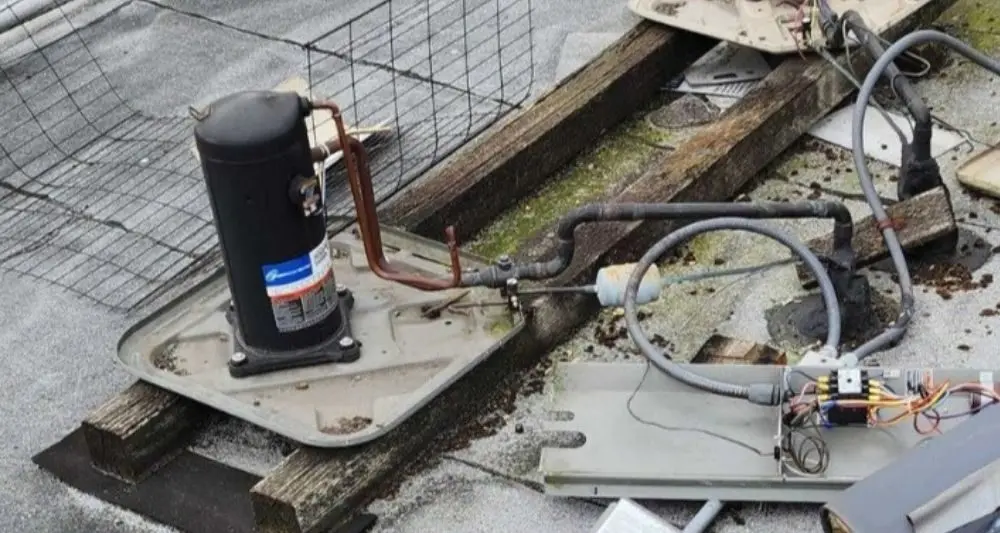
Copper wire thefts have become a persistent issue across the system, in some cases shutting down entire rail lines.
- A recent theft on the 2 Line in Bellevue halted service after suspects cut through fencing and stole critical wiring, forcing a full shutdown while repairs were made.
- On the 1 Line near Federal Way, repeated copper thefts have caused power outages and forced riders onto bus shuttles during peak commute hours.
- In multiple incidents across 2025 and 2026, thieves have targeted electrical systems, disrupting service for hours and raising concerns about system vulnerability, even on the day of the Super Bowl parade.
Officials have acknowledged the problem is ongoing, with Sound Transit increasing cameras and patrols, but thefts continue, sometimes even occurring while trains are in service.
Industry experts and utilities have warned that copper theft in Washington has reached “crisis level,” often driven by drug addiction and the resale value of materials.
Hey @SoundTransit
It's bad enough that you always over budget and under deliver, but now you are demonizing us as mindless zombies for not taking your dangerous, drug-infested trains?
You steal our money in property and car taxes, now you insult us? pic.twitter.com/SaNPEcfnOT
— Ari Hoffman (@thehoffather) May 5, 2026
A Growing Disconnect
For critics, the contrast is stark.
On one hand, Sound Transit is asking taxpayers to fund an increasingly expensive system while encouraging drivers to abandon their cars. On the other hand, the agency is grappling with crime, drug use, and infrastructure vulnerabilities that have already impacted reliability.
At the same time, lawmakers have pursued policies aimed at reducing car usage and increasing reliance on transit, fueling concerns that commuters are being pushed toward an unreliable and limited system they may not feel safe using.
A Tough Sell to Washingtonians
Sound Transit’s new campaign attempts to reframe public transit as the smarter, more “human” choice.
But for many Washington residents, the reality on the ground may tell a different story.
Between cost overruns, safety concerns, and repeated service disruptions, the agency faces a growing credibility problem.
And now, critics say, it’s not just about performance.
It’s about perception, especially when the people footing the bill are being portrayed as “mindless” for choosing not to ride, when those in charge of the agency continue to make brainless decisions.