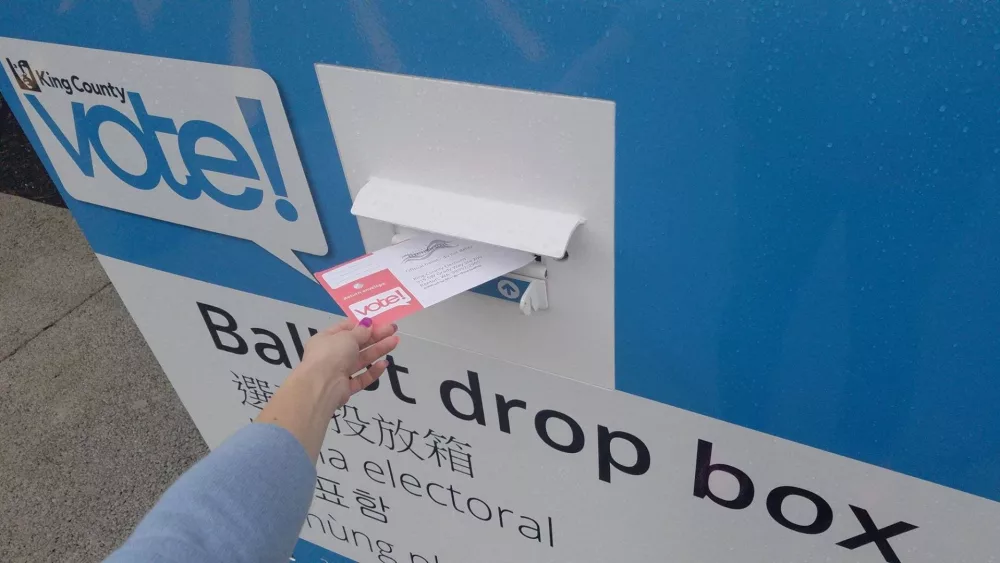
The Seattle Times managed to do something impressive this week: take a Supreme Court case about when ballots must be received and spin it into a panic-inducing headline suggesting that vote-by-mail itself is somehow at risk.
That was never the case.
“This is not about ending vote-by-mail. That’s not what this case is…The Seattle Times got it so wrong that they had to rewrite the story.” pic.twitter.com/tpTjO8Kscb
— Ari Hoffman (@thehoffather) March 24, 2026
The original framing was so bad that the Times got ratioed hard enough to change both the headline and the article, then send out a correction email. That alone tells you how misleading the first version was. The issue before the U.S. Supreme Court is not whether states can allow people to vote by mail. The issue is whether ballots that arrive after Election Day can still be counted, even if they were postmarked on time.
That is a very different question.
NEW: The Seattle Times got so much backlash for their fear-mongering BS headline about SCOTUS looking at the vote by mail system, they had to change the headline and story
CANCEL YOUR SUBSCRIPTIONS pic.twitter.com/XrIOx2Kveq
— Ari Hoffman (@thehoffather) March 23, 2026
Calling this a threat to “mail by vote” — or “vote by mail,” as normal humans say — is either deliberate clickbait or gross incompetence. Probably both.
This Case Is About Election Day Meaning Election Day
The Supreme Court heard arguments in a case involving a Mississippi law that allows mailed ballots postmarked by Election Day to be counted if they arrive up to five days later. The Republican National Committee challenged that law, and the 5th Circuit sided with the RNC in 2024. Now the Supreme Court is weighing in.
During oral arguments, Justice Samuel Alito made a point that should not be controversial: the word “day” means a day.
🚨 BREAKING: The Supreme Court appears poised to STRIKE DOWN state laws allowing the mass acceptance of mail-in ballots after election day, following oral arguments — AP
It could affect several DOZEN states.
THIS IS HUGE! 🔥
Justice Sam Alito delivered a MASTERCLASS in… pic.twitter.com/6vVbbPqNUT
— Eric Daugherty (@EricLDaugh) March 23, 2026
He noted that we all understand terms like Labor Day, Memorial Day, and Independence Day to mean a specific day, not a vague window of time before and after. His point was simple: if Congress set an Election Day, then that should be the day the election happens.
Not Election Week.
Not Election Month.
Not “whenever the ballot eventually shows up.”
That does not mean states cannot have vote-by-mail. It means there may need to be a clear deadline for when those ballots must actually be received and counted.
There Is Room for Common Sense Here
Now, I happen to understand the argument on the other side. If a voter mails a ballot on time and the Postal Service delays it, why should that voter be punished?
That is a fair point.
If a ballot is postmarked by Election Day, many people would say it should count. There is a reasonable debate to be had there. But that is the debate. The debate is not whether vote-by-mail should disappear. It is not whether Washington’s entire election system is about to collapse. It is not whether democracy ends because the Court insists Election Day has to mean something.
What the Seattle Times did was inflate a narrow legal dispute into a hysterical narrative.
Washington’s System Already Has Too Many Loopholes
And in Washington state, this matters because our election system already asks a lot of the public’s trust.
We know there are vulnerabilities. We know there are ambiguities. We know there have been cases that expose flaws in the process.
My own wife has had problems with her ballot information being wrong for years. My son was able to register online without having to show any ID. That does not automatically prove fraud is widespread, but it does prove the system is not nearly as airtight as the people running it like to pretend.
Then there are the documented problems involving ballots and postmarks. There was a Seattle case in which a mailbox was out of service, ballots were discovered after the election, they lacked postmarks, and they were still counted anyway. There have also been reports that some ballots are not even stamped with the date they are received that same day, meaning voters are expected to navigate a murky process if they want assurance their ballot will count.
That is not a system designed to inspire confidence.
That is a system ripe for disputes, confusion, and abuse.
“Ripe for Problems” Is Not the Same as “Proof of Fraud”
Let’s be clear about something important: saying a system is vulnerable is not the same as saying every election is stolen.
It means the rules are messy. It means safeguards matter. It means the public should want election procedures that are transparent, secure, and easy to verify.
Why is that controversial?
Why shouldn’t voters want the most secure elections possible?
Why is every effort to tighten the rules treated like some kind of attack on democracy, when in reality confidence in elections is one of the foundations of democracy?
Even Bob Ferguson Admits There Are Problems
Here is where things get especially revealing.
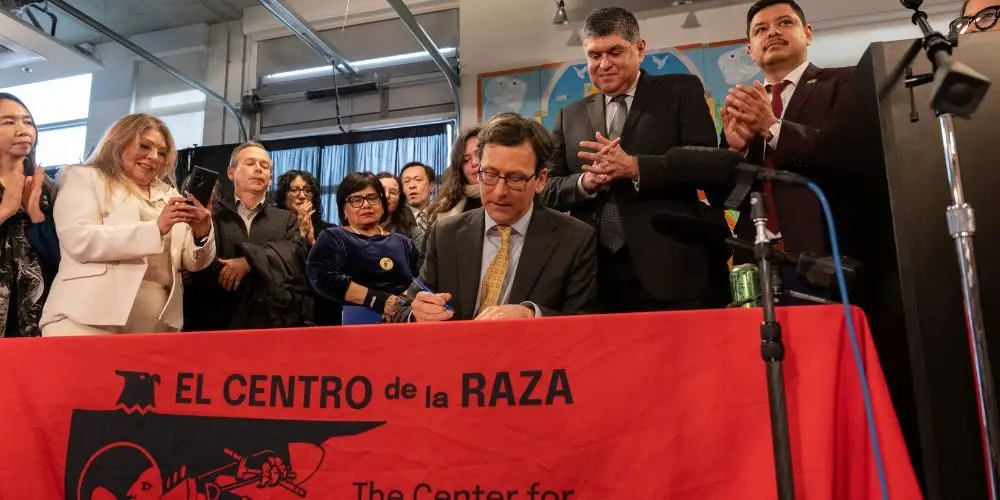
Governor Bob Ferguson recently signed Senate Bill 6084 to clarify state law and prohibit double voting. The bill was prompted by a real case: a Lewis County man voted once in Washington and once in Oregon in the same election. He was charged, found guilty of a felony, and then had the conviction overturned because Washington’s legal definition of an election was unclear.
So the legislature fixed it.
Fine. Good. They should have.
But notice what that means: officials are now openly acknowledging that people have voted in more than one state in the same election. That happened. It was serious enough to require a legislative correction. The bill passed 47-1 in the Senate and 93-0 in the House.
And yet for years, the same crowd insisted this kind of thing was not happening.
So which is it?
If there was no problem, why did state law need to be fixed immediately? If nobody was exploiting weaknesses, why the urgency? And if the state is serious about preventing double voting, is it actually going to compare voter rolls with other states to catch it?
That is where the conversation always gets uncomfortable for the people who claim there is “nothing to see here.”
Counting Votes After Election Day Is Not the Same as Accepting New Votes
There is also an important distinction that often gets blurred.
Yes, election officials may continue counting ballots after Election Day. That is normal. Large elections take time to tabulate.
But continuing to count ballots that were already received is very different from continuing to accept new ballots that arrive after the deadline.
Those are not the same thing.
Other countries manage to hold elections and produce results quickly. France does. Israel does. The United States, by contrast, has somehow normalized election seasons that drag on for days or weeks. At some point, people are justified in asking whether the process has become unnecessarily loose and chaotic.
What the Supreme Court Could Do
If the Court upholds the 5th Circuit, more than a dozen states and Washington, D.C., may have to stop counting ballots that arrive after Election Day, even if they were postmarked on time. Military and overseas ballots would likely remain under separate federal protections.
That would be a significant change for some states ahead of the 2026 midterms. But again, it would not ban vote-by-mail. It would simply require that mailed ballots be received by a fixed deadline.
That is not some radical proposition.
That is called having rules.
The Real Story
The real story here is not that vote-by-mail is under attack.
The real story is that the Supreme Court is being asked to decide whether federal elections are supposed to happen on Election Day or over a longer and more elastic timeline. That is a legitimate legal question. It deserves honest coverage, not manipulative headlines.
The Seattle Times tried to turn a ballot receipt deadline case into a broader fear campaign about the end of voting by mail. That was false, and they knew it quickly enough to rewrite the story.
Good.
They should have.
Because voters deserve better than media outlets that confuse the issue, inflame the public, and then quietly edit the story after getting caught.
Election integrity is not extremism. Clear deadlines are not voter suppression. And asking whether Election Day should actually mean Election Day is not an attack on democracy.
It is common sense.