
Another legislative session is underway in Olympia, and with it comes a familiar routine: a new slate of gun control bills targeting Washington residents who choose to exercise their Second Amendment rights.
To break down what lawmakers are proposing this year—and which bills pose the greatest threat—I spoke with William Kirk of Washington Gun Law, a longtime advocate for gun owners and a returning guest on The Ari Hoffman Show.
Democrats “don’t enforce the laws already on the books. They just come up with new ones. That tells me this isn’t about public safety, it’s about disarming the population or taxing them.”
My interview with William Kirk from @GunWashington pic.twitter.com/c2ftAmGtsP
— Ari Hoffman (@thehoffather) January 21, 2026
According to Kirk, the pattern is clear.
“These terrible gun laws all come from one side of the aisle,” he said. “It’s not hard to identify the problem.”
The Bills with the Most Momentum
Kirk explained that lawmakers are carrying over six gun-related bills from last session, along with four new proposals. While some are unlikely to go anywhere, two stand out as the most dangerous—and the most likely to pass.
The first is Senate Bill 5098, which would dramatically expand so-called “gun-free zones,” particularly in places where children are present.
“That means the very locations where you might most need to defend your family would be gun-free zones,” Kirk said.
While the bill includes an exception for concealed pistol license holders, Kirk warned that expanding gun-free zones historically has the opposite effect of what lawmakers claim to want.
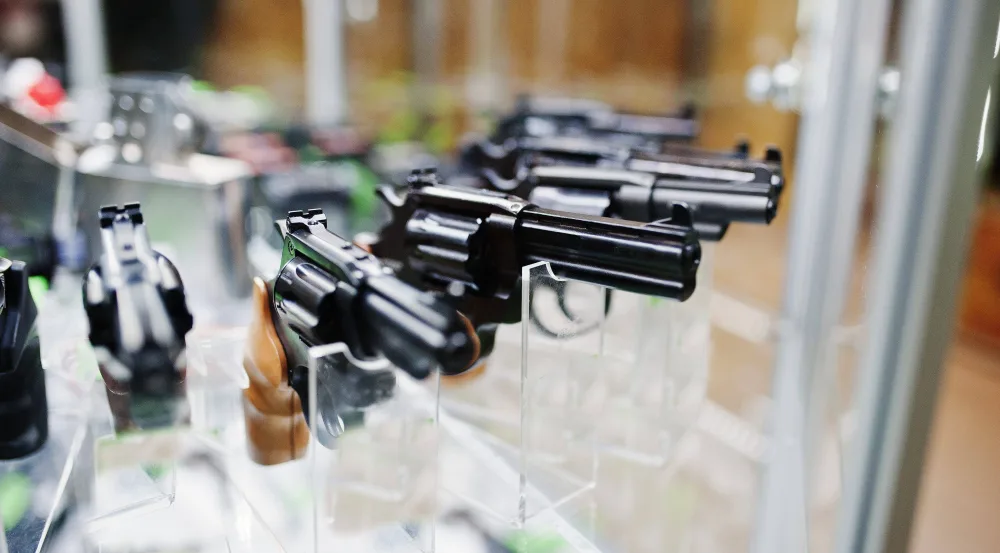
The second bill, House Bill 1386, would impose new taxes on firearms, ammunition, and components.
“Anything with the word ‘tax’ attached to it is going to be very popular with the Democratic Party,” Kirk said. “That one has a real chance of making it to the governor’s desk.”
Gun-Free Zones and Public Safety
The debate over gun-free zones comes as public safety concerns continue to grow—particularly on mass transit. Despite bans on firearms in places like light rail systems, violent incidents involving knives and other weapons persist.
Kirk pointed to decades of data showing that gun-free zones don’t deter violence.
“Since 1990, 86% of all mass shootings have occurred inside gun-free zones,” he said, citing research from the Crime Prevention Research Center. “If someone is intent on committing violence, they go where there’s no armed resistance.”
In other words, these laws don’t protect people—they make them targets.
Law-Abiding Gun Owners Aren’t the Problem
Kirk emphasized a point often ignored in Olympia: gun owners overwhelmingly follow the law.
“Gun owners tend to be incredibly law-abiding citizens,” he said. “The people committing crimes are the ones who already don’t follow the law.”
Despite this, lawmakers continue to propose restrictions on legal ownership rather than enforcing existing laws. Kirk noted that previous bills aimed at increasing penalties for criminals using stolen or illegally possessed firearms never even received committee hearings.
At the same time, legislators have pushed proposals banning 3D-printed firearms—and even 3D printers themselves.
“That’s like banning flock cameras because you don’t want to deal with crime anymore,” Kirk said.
The 3D Printer Proposal’s Broader Impact
Kirk warned that banning 3D printers would have far-reaching consequences beyond firearms.
“Probably only about 1% of people who use 3D printers are printing firearm components,” he said. “This would affect aerospace, marine manufacturing, and countless industries that rely on 3D printing.”
Most hobbyists, he added, are printing everything from replacement parts to cosplay props—not weapons.
What’s Happening in the Courts
While Olympia continues to push forward, several Washington gun laws are already tied up in the courts.
Washington’s magazine capacity ban is currently before the U.S. Supreme Court on conference, with similar cases coming out of California. Challenges to “assault weapon” bans from Illinois and Connecticut could also directly impact Washington’s laws.
The Supreme Court has already agreed to hear two Second Amendment cases this term, including Wolford v. Lopez, a challenge to Hawaii’s gun-free zone law. Another case later this year will address whether cannabis users can be prohibited from owning firearms.
For the first time, Kirk noted, the U.S. Department of Justice is also actively challenging unconstitutional gun laws—a major shift at the federal level.
A Familiar Strategy
To Kirk, the pattern in Olympia is unmistakable.
“They don’t enforce the laws already on the books,” he said. “They just come up with new ones. That tells me this isn’t about public safety—it’s about disarming the population or taxing them.”