

The closure comes as Washington manufacturers warn that taxes, regulations and rising costs are pushing future investments and jobs to other states.
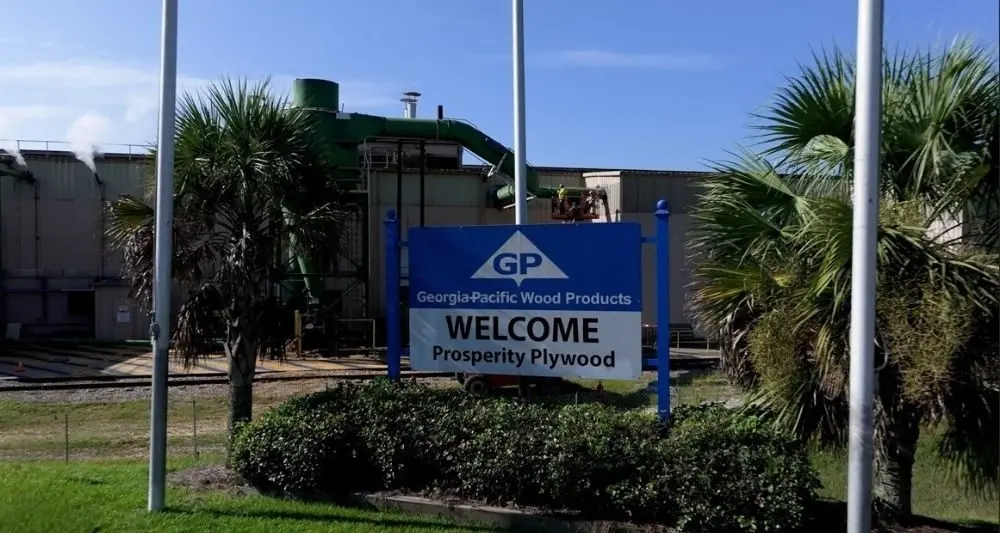
Georgia-Pacific will permanently close its entire Tacoma gypsum facility this fall, eliminating 120 manufacturing and support jobs as Washington continues to lose employers, expansions, and investment to more business-friendly states.
According to a Worker Adjustment and Retraining Notification filed with the Washington State Employment Security Department, Georgia-Pacific Gypsum will shutter its facility at 1240 Alexander Avenue in Tacoma and eliminate every position at the plant.
BREAKING: Georgia-Pacific Gypsum, a roofing manufacturing company is closing its Tacoma location and permanently laying off 120 people beginning Oct 30
The Washington State Employment Security Department received a WARN today
Are Democrats going to blame this on AI?
— Ari Hoffman (@thehoffather) September 2, 2026
Affected employees are expected to be laid off beginning October 30, though the company said some separations could occur earlier or later depending on business needs. A limited number of workers may remain temporarily to help shut down the facility.
The cuts include production associates, machine operators, loaders, forklift operators, electricians, mechanics, supervisors, engineers, safety and environmental managers, quality-control employees and the plant manager.
Georgia-Pacific said affected workers will receive at least 60 days of pay and benefits in accordance with federal and state WARN laws. Some hourly employees are represented by Teamsters Local 117, and the company said workers will not have bumping rights.
The shutdown represents another significant loss of blue-collar industrial jobs amid mounting warnings that Washington’s tax and regulatory climate is driving companies to place major investments elsewhere.
One of the most prominent recent examples is Sedro-Woolley-based Janicki Industries, one of the nation’s largest privately owned aerospace suppliers. The company selected Great Falls, Montana, for an $800 million manufacturing campus expected to create 1,000 jobs in its first five years and eventually employ more than 2,000 workers.
Company President John Janicki said Washington’s increasingly hostile business environment was slowing the company’s growth at home. “Washington is our home, and that is not changing,” Janicki said when announcing the company’s multistate expansion strategy. “Our footprint in Washington has continued to grow but is slowing due to ever-increasing regulations and lack of business understanding at an executive and legislative level.”
Janicki said the state’s policies were making it more difficult for the company to create jobs and invest locally, prompting it to pursue its largest expansion elsewhere.
Starbucks has also been steadily shifting corporate functions away from its Seattle hometown while building a major new hub in Nashville. The coffee giant is investing $100 million in a Tennessee office that could eventually house as many as 2,000 workers.
In August, Starbucks disclosed that 224 additional positions tied to its Seattle headquarters were being eliminated or moved. Approximately 120 affected employees were offered transfers to Nashville and declined to relocate. Those losses followed hundreds of other Seattle-area corporate cuts and dozens of Washington store closures.
The corporate pullback has not been limited to technology companies, though Amazon, Microsoft, Google, Meta, Salesforce and Zillow have collectively eliminated thousands of Washington jobs.
A 2026 Association of Washington Business survey found employers were more than twice as likely to consider expanding outside Washington as within the state. Manufacturers cited taxes, regulations, energy costs and uncertainty about state policy among their concerns.
The warnings intensified after Washington Democrats enacted a 9.9 percent tax on annual income above $1 million, along with additional business tax increases.
Unlike many of the recent white-collar layoffs concentrated in Seattle and Bellevue, Georgia-Pacific’s Tacoma closure eliminates skilled production, maintenance, engineering and logistics jobs across an entire industrial facility. Once the remaining shutdown work is completed, the plant will cease operating permanently.
