
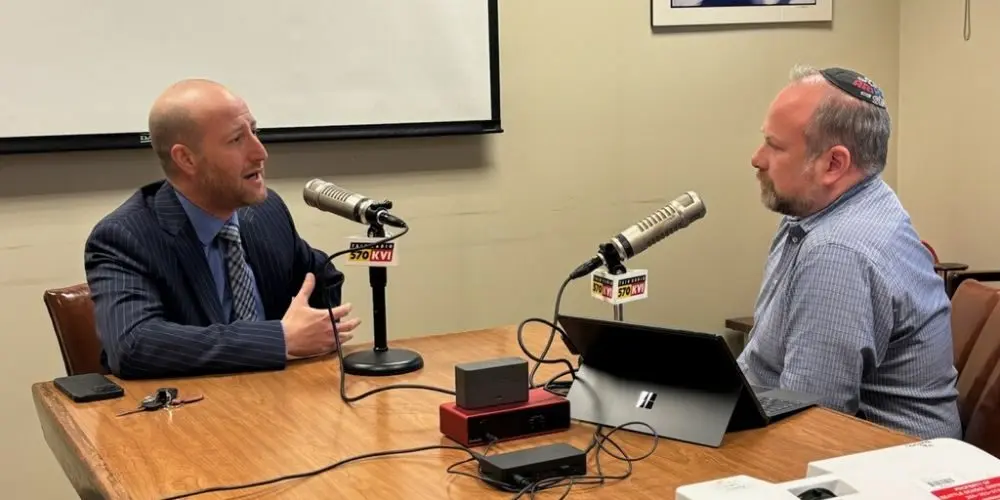
Seattle Public Schools Superintendent Ben Shuldiner says his top priority is straightforward: “the safety of our children.” In a wide-ranging interview on The Ari Hoffman Show on Talk Radio 570 KVI, he addressed major issues facing the district—from campus security and police partnerships to staffing, curriculum concerns, and rebuilding trust with families.
Shuldiner entered the role just days after a deadly shooting near Rainier Beach High School that claimed the lives of two students. “It is a tragedy, an unspeakable tragedy,” he said, calling it “a clarion call for action from us, from the community, and from the school district at large.”
Safety First: Locking Down Open Campuses
“I think one of the first things we’re doing is we’re making sure that we have a much better relationship with the police department,” Shuldiner said. Police officers were removed from SPS campuses in 2020 following the BLM riots that rocked Seattle.
Shuldiner said the district is taking a layered approach to safety, combining infrastructure upgrades with stronger relationships among students, staff, and the community.
That includes evaluating physical protections like cameras, single points of entry, special film on windows, and fencing. “We’ve got to do all of those things, but we’re also looking at how schools can be safer.”
But he emphasized that awareness and connection matter just as much. “Really, what we’re looking at is having better relationships with our children so that we know if things are going to happen, that we can help to protect them.”
He also raised concerns about how accessible many campuses are today. “I’ll go to visit some of our schools, and they’re so open… people from the community could walk right into the schools. That’s not acceptable.”
Even playground design can create risks. “If you have a five-year-old… and it’s very easy for somebody to come and get them, that’s scary to me.”
Despite budget constraints, he said safety spending is essential. “The first question is, are our children safe… and if we have the money to spend, we have to spend it on that.”
Police: ‘One Millimeter Outside the Door’
Shuldiner said he wants a stronger relationship with Seattle police—but not officers stationed inside schools full-time.
“I don’t believe in SROs,” he said, referring to School Resource Officers.
He warned that having armed officers inside schools can escalate routine incidents. “Kid misses the kid and hits the cop by mistake… well now everybody’s arrested. It becomes this whole thing.”
Instead, he wants law enforcement to focus on areas outside school buildings. “You know where the police should be? One millimeter outside the door.” Shuldiner emphasized, “I want our relationship with the police to be incredibly strong.”
“The moment that kid walks out onto the bus stop, I can’t protect that. I want the police department to be there.”
"You know where the police should be? One millimeter outside the door…I want our relationship with the police to be incredibly strong. But where they need to help us, because we can't, is on the corner, at the bus stop, in the street. I'm the superintendent. If I can't keep… pic.twitter.com/ukS2CL1bnV
— Ari Hoffman (@thehoffather) April 16, 2026
Central Office and Spending Under Review
Pressed on district spending, Shuldiner acknowledged a common criticism he hears from the public: “Hey Ben, just sell the John Stanford building, get everybody into the schools—I hear it.”
He went on to explain why the central office still plays a critical role in a system serving “50,000 kids” and “9,000 employees,” handling payroll, HR, budgeting, and operations.
At the same time, he agreed that improvements are needed. “Are there some people in this building that could be in schools? A hundred percent.”
He emphasized that more staff should be spending time where it matters most. “The truth is the magic of a school district happens in the classroom… and the more that we have our wonderful employees there, the better.”
Ending Remote Work and Refocusing on Schools
Part of that effort includes bringing staff back from remote work. Around 330 employees had been working from home at least part-time.
“They’ve always been working, I hope,” Shuldiner said, but added that students benefit when staff are on-site.
“What would be best for that person is for them to be in the schools as much as they can be.”
‘Rubber Room’ Concerns and Faster Accountability
Shuldiner also addressed concerns about employees on leave or under investigation—an issue that has drawn criticism in large districts nationwide.
Referencing his experience in New York, he pointed to the infamous “rubber room,” where staff could sit idle for long periods. “Sometimes people languish there for a year or two years,” he said.
He made clear that kind of system is unacceptable. “What we can’t do is have a system that takes so much time.”
Instead, he wants faster resolutions: “If they did something wrong… we’ve got to do our job. And if they did nothing wrong, get them back in with the kids.”
“The kids don’t want somebody at home. The kids want somebody in the classroom.”
Curriculum Fight: Concerns Over Bias and Oversight
Hoffman also pressed Shuldiner directly on the controversial diversity, equity, and inclusion (DEI) curriculum and what he described as divisive material being used in classrooms.
“You have kids walking out in support of terrorist organizations… it seems like the kids have only gotten divided,” Hoffman said. He also raised concerns that curriculum materials were created by “somebody who writes very divisive stuff, anti-Israel, anti-Jewish… anti-a lot of other things,” and questioned whether taxpayer money was being spent on instruction that takes away from core academics.
Shuldiner responded by widening the scope beyond any one controversy, saying the district needs a comprehensive review of all materials being taught.
“All curriculum needs to be looked at—is it serving our children?” he said.
He pointed to achievement gaps as a major concern. “If that’s true, then what have we been doing for these last 20, 30 years?”
He also acknowledged gaps in oversight. “Is stuff being vetted? Is stuff being approved? … my answer is, probably not.”
Parents, Policy, and Rebuilding Trust
On contentious policy issues and parental rights, Shuldiner emphasized the need for balance and cooperation.
“The voice of the parent is really important,” he said, while noting the district must also follow state law.
He warned that the growing conflict between families and schools is counterproductive. “There seems to be this growing antagonism… and that’s a big mistake. I think we need to work together.”
Through community meetings, he’s heard a consistent message: “They love their teachers. They love their schools. Central office could use some work.”
Bottom Line: Fix What Isn’t Working
Throughout the interview, Shuldiner repeatedly returned to a core theme—accountability and urgency.
“The more that we can work together… the more that I can be open and listen to folks, the better,” he said.
From tightening school security to speeding up personnel decisions and reviewing curriculum, the superintendent signaled that no part of the system is off-limits.
But above all, he made clear what comes first: keeping students safe.