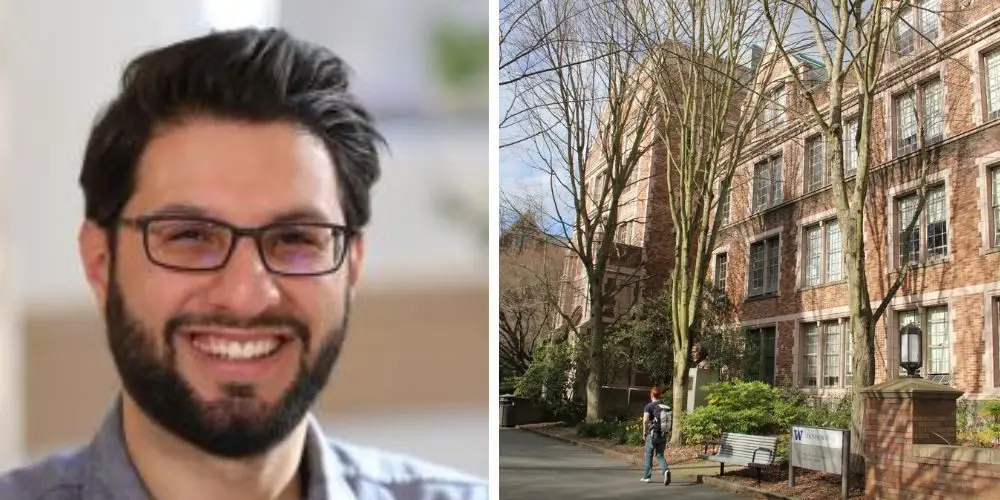

Secretary Scott Turner of the US Department of Housing and Urban Development (HUD) said the federal government is investigating Washington state’s Covenant Homeownership Program over concerns it unlawfully discriminates based on race, calling the policy a direct violation of the Fair Housing Act.
The investigation was formally launched on March 24, 2026, when HUD notified the Washington State Housing Finance Commission that it is probing whether the program illegally provides subsidized mortgage assistance based on race.
“DEI IS DEAD AT HUD”
“Our job at HUD is to uphold and enforce the Fair Housing Act, and we believe Washington state may be violating it. This is a statewide investigation into race-based housing policy."@SecretaryTurner discusses WA's discriminatory housing program pic.twitter.com/RBrWLLyDWN
— Ari Hoffman (@thehoffather) April 6, 2026
In an interview on The Ari Hoffman Show on Talk Radio 570 KVI, Turner defended HUD’s decision to open the probe into the state’s controversial housing program, which was introduced in 2024 as a form of reparations for past housing discrimination.
“At HUD, our job is to uphold and enforce the Fair Housing Act,” Turner said. “We have reason to believe that in Washington state, they are using housing policy that is not based on merit, not based on need, but literally based on race.”
The Covenant Homeownership Program was the Commission’s first openly race-based housing finance initiative, aimed at what officials described as “people of color and other historically marginalized communities.”
Under the program, eligible first-time homebuyers can receive down payment and closing cost assistance through a zero-interest secondary mortgage loan. The loans do not need to be repaid until the home is sold or refinanced, and some borrowers may qualify for full forgiveness after several years.
But eligibility is determined not just by financial need—but by ancestry.
Applicants must demonstrate that they—or a parent, grandparent, or great-grandparent—lived in Washington before April 1968, when the Fair Housing Act outlawed housing discrimination. Even then, only certain racial groups qualify. The program is limited to individuals of Black, Hispanic, Native American or Alaska Native, Native Hawaiian or other Pacific Islander, Korean, or Asian Indian descent.
Those who are Japanese-American, Jewish-American, Arab-American, or Caucasian are categorically excluded from eligibility.
Turner said that structure raises clear legal concerns.
“When you have a policy that gives preferential treatment because of race, and then excludes others because of their race, that’s a double violation of the Fair Housing Act,” he said.
The program has also drawn criticism for excluding groups that were themselves victims of housing discrimination. A state-commissioned study used to justify the policy acknowledged that Jews and people of Asian descent faced “egregious” discrimination, yet those groups are largely ineligible for assistance.
Despite being framed as a remedy for past injustice, the program is not limited to low-income applicants. Eligibility extends up to 120 percent of area median income, raising further questions about whether the policy is based on need at all.
The program is funded through a $100 fee on recorded documents, meaning Washington residents, including those excluded from eligibility, are helping pay for benefits they cannot receive.
Turner emphasized that the Trump administration is taking a broader approach to civil rights enforcement, rejecting race-based policies in favor of equal treatment under the law.
“We want equal rights, not extra rights,” Turner said. “We want to protect the civil rights of all Americans, not according to race, but all Americans.”
The HUD investigation marks a significant escalation, as it is a statewide probe rather than a localized inquiry. Turner noted that while HUD has investigated cities like Boston and Minneapolis, this case involves an entire state program.
Beyond the Washington investigation, Turner also pointed to what he described as broader failures in housing policy that have driven affordability issues nationwide, including years of inflation, regulatory overreach, and surging illegal immigration that strained housing supply.
According to Turner, federal, state, and local regulations add roughly $94,000 to the cost of a single-family home, while Biden-era green energy mandates added tens of thousands more to housing projects. In response, President Donald Trump has issued executive orders aimed at slashing red tape and boosting housing construction.
Those efforts, Turner said, are already showing results. In 2025, more than 60 percent of homebuyers purchased homes at a discount, and home purchase applications rose by nearly 10 percent, signaling renewed momentum in the housing market.
Turner also pointed to shifting rental trends, arguing that immigration policy has played a major role in housing demand.
“In places like New York and California, 100 percent of the increase in rental demand was driven by illegal immigration,” Turner said, adding that stricter enforcement and deportation policies under President Trump are helping ease pressure on the housing market.
Now, according to Turner, those trends are reversing. In 2025, net immigration declined across every metro area, and rental markets have reached their most affordable levels in four years.
The administration argues that a combination of deregulation, immigration enforcement, and increased housing supply is helping restore affordability, and expand access to homeownership for American citizens.
The case is shaping up to be a major test of whether race-based “reparations” programs can withstand federal civil rights law, or whether they will be struck down as unconstitutional discrimination.