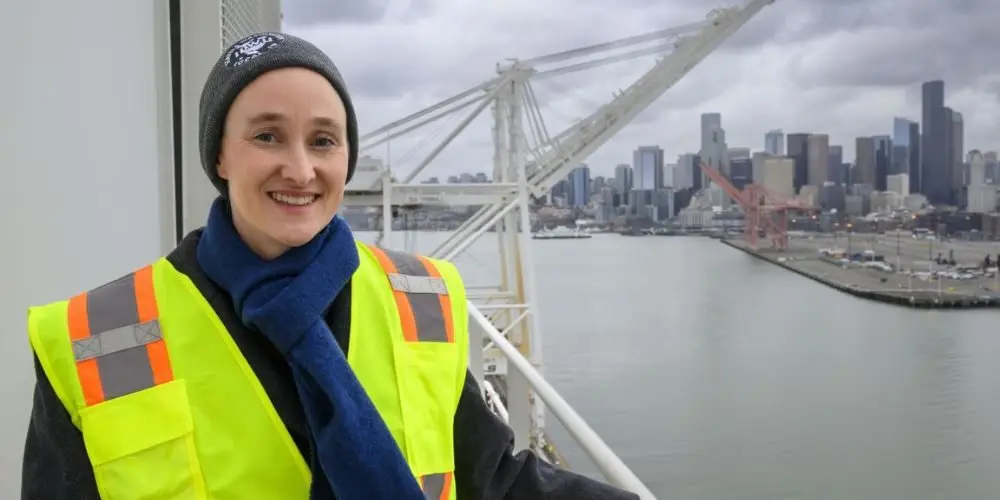
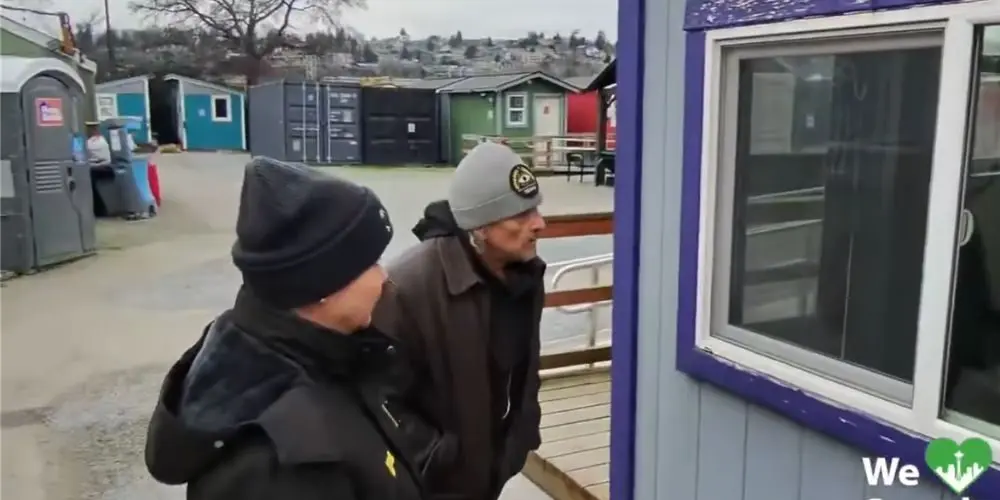
A local nonprofit leader is sounding the alarm over what she describes as widespread drug use inside taxpayer-funded homeless housing, after documenting what she calls a “smoking shack” inside a Seattle tiny home village.
Andrea Suarez, founder and CEO of We Heart Seattle, joined The Ari Hoffman Show on Talk Radio 570 KVI this week to discuss her recent visit to the Interbay Tiny House Village, where she says she encountered a designated area for drug consumption.
“There are fentanyl smoking rooms in tiny house villages…This is a low-barrier encampment where you can bring in whatever you want—including illegal drugs.”@weheartseattle founder Andrea Suarez was banned from a Seattle tiny home village after exposing rampant drug use pic.twitter.com/0ck0L8GGyn
— Ari Hoffman (@thehoffather) April 1, 2026
According to Suarez, she was visiting a client at the village when she observed a structure being used for fentanyl use. She later shared a video of the site on social media, prompting backlash and ultimately leading to her being barred from returning.
Don’t hate the player, hate the game. Funding requires low barrier (drugs allowed), and “harm reduction” practices like this dedicated volunteer built tiny home to smoke illegal and lethal Fentanyl. Do the voters know they are paying for this and to be installed in their… pic.twitter.com/nPuMPS72Wm
— We Heart Seattle (@weheartseattle) March 24, 2026
“I’ve been sounding the alarm for years,” Suarez said. “There are fentanyl smoking areas in tiny house villages, hotels run by diversion programs, and other sanctioned sites—but this was the first time I was able to capture clear evidence.”
Suarez described the village as a “low-barrier” facility, meaning residents are allowed to bring in drugs and are not required to pursue sobriety as a condition of housing. She also claimed that staff members were more concerned about her presence than the activity she documented.
“They told me I was blacklisted and needed to leave,” she said. “This is supposed to be low-barrier—yet they barred me for exposing what’s happening.”
The concept of “harm reduction” policies was a central point of discussion during the interview. Suarez argued that, in practice, these policies can discourage intervention—even in dangerous situations.
“In these environments, calling the police is often discouraged unless something extremely serious happens,” she said. “The idea is to not increase harm, but what I’ve seen raises serious concerns about safety.”
Suarez also questioned whether some of these housing sites are effectively functioning as unofficial supervised consumption spaces—facilities where individuals use drugs under observation to reduce overdose risk.
“If that’s the direction we’re going, then we need to be honest about it,” she said. “Let voters decide if they support supervised consumption sites, but don’t implement them without transparency.”
Beyond drug use, Suarez alleged that some subsidized housing units are being used for illegal activities, including drug transactions and prostitution. She claimed that residents can exploit guest policies to “rent out” their units for short periods in exchange for money or drugs.
While she said she has not personally observed reports of childcare operations in such facilities, she confirmed that illicit activity is “100 percent” occurring across various types of sanctioned housing.
Suarez framed the broader issue as a drug crisis rather than solely a homelessness crisis, arguing that addiction treatment—not just housing—should be the primary focus.
“These aren’t just people who need shelter,” she said. “Many are struggling with addiction first and foremost, and without treatment, housing alone won’t solve the problem.”
Looking ahead, Suarez called for stricter enforcement of drug laws in public spaces, including areas near parks, transit stops, and event venues. She argued that stronger penalties and coordinated action among law enforcement, prosecutors, and courts are necessary to curb open drug use.
“We have to create real consequences for drug activity in shared spaces,” she said. “Otherwise, we’re not going to see meaningful change.”