
Do you remember the name Raz Simone?
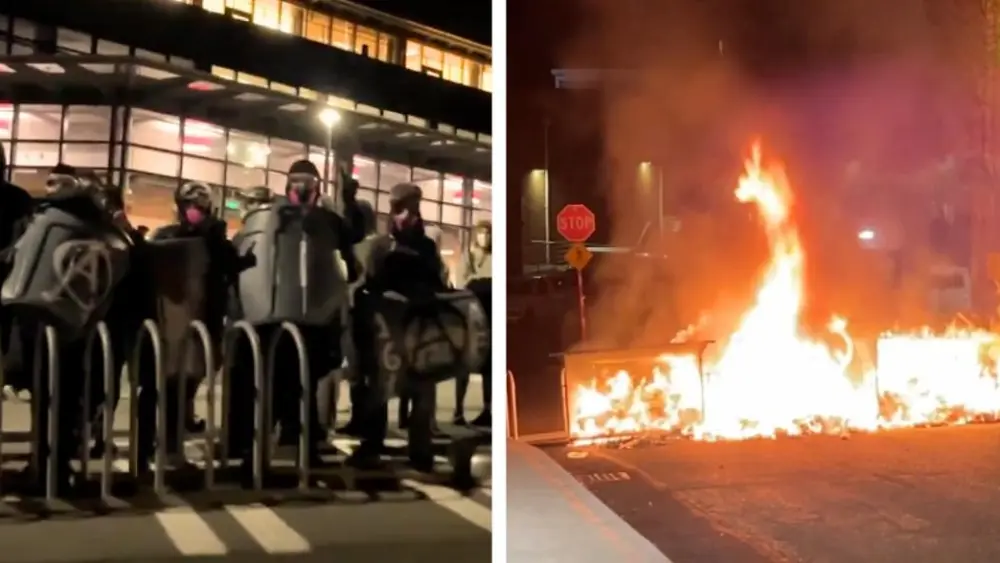
For a lot of Seattle, it’s a name that disappeared as quickly as it rose—an emblem of the violent “Summer of Love” in 2020 when rioters established the Capitol Hill Autonomous Zone (CHAZ) by taking over six blocks after Seattle police were ordered to abandon their East Precinct. One minute, Simone was everywhere: leading marches, giving speeches, talking to the media, and occupying a kind of unofficial “security” role in the zone. The next, he seemed to vanish, scrubbed from the mythology of what some insisted was a “peaceful protest,” despite the gunfire, death, and disorder that residents and businesses around Capitol Hill say they experienced in real time.
“Do you remember the name Raz Simone? Seattle once called him the "Warlord of the Autonomous Zone?”
Well, now he owes four women $2.1 million after being found liable for criminal profiteering. The only consequences came when private citizens dragged him into civil court.” pic.twitter.com/egiqzsd33H
— Ari Hoffman (@thehoffather) March 5, 2026
Now his name is back in the headlines: a King County jury found Simone liable for criminal profiteering and awarded four women $2.1 million in a civil case.
The women alleged Simone pulled them into his “family,” imposed strict rules, pressured them to meet earning quotas through stripping or sex acts, and took the money they made. They said he used threats, violence, coercion, and isolation to control them, down to dictating clothing, food, and, at times, confining them in narrow sleeping pods in Seattle. Evidence described in the case included handwritten notes, text messages, medical records, protective orders, and financial records, plus photos and videos that showed bruising on some of the women. Simone denied the allegations at trial. He was never charged with trafficking.
But the verdict is also a mirror held up to Seattle’s unresolved question from 2020: how did the city allow an “autonomous zone” to form, and why did so many obvious warning signs produce so little accountability?
The city that “surrendered” six blocks—then acted surprised by the consequences
Seattle leaders didn’t just fail to contain unrest after the death of George Floyd; they ceded space to it. The East Precinct was abandoned after consecutive nights of riots, and six blocks became an armed occupation.
Whether you view CHAZ as a protest that spiraled out of control or as a lawless takeover from the start, the central issue remains the same: when government steps back from enforcing basic public safety, someone else steps in. In CHAZ, that “someone else” was a mixture of BLM radicals, antifa militants, and activists with their own agendas.
This is where Raz Simone became a symbol. He wasn’t elected. He wasn’t deputized. But he was visible, armed, and treated by some as a figure of authority because of his use of force.
And that’s the part that should still disturb Seattle: during the occupation, videos circulated online showed Simone assaulting people inside the zone and distributing AR-15s from the trunk of a white Tesla to people who would “stand post.” Whatever your politics, it’s not controversial to say that self-appointed armed enforcement inside an improvised encampment is a recipe for disaster.
A civil verdict, a trail of allegations, and the feeling that the real questions were never answered
A jury’s decision to hold Simone liable for criminal profiteering is a finding that the plaintiffs proved their case under a serious legal theory, with real money attached. It also lands in the middle of a wider set of troubling public reports.
A 2022 investigation by The Seattle Times and KUOW reported that Seattle police had been aware for years of allegations involving Simone and his label, Black Umbrella—claims that included trafficking, assault, and rape, with accusations stretching back to at least 2012. That reporting described multiple people—women and the parents of two others—saying Simone entangled women in a multistate sex trafficking scheme. Prosecutors, the reports said, declined a criminal case in 2022 due to insufficient evidence to prove it beyond a reasonable doubt, and also said information they requested from SPD that could have strengthened the case was never provided.
Meanwhile, the civil lawsuit at one point included the Seattle Police Department, alleging neglect in investigating Simone, before the city was dismissed from the case. Simone later faced a separate criminal charge (second-degree assault/domestic violence tied to the alleged strangulation of a woman he has a child with); that case was dismissed, and the alleged victim was not part of the civil lawsuit. An FBI investigation is believed to be ongoing.
If the system has had Simone on its radar for years—if authorities know who he is and where to find him—why does the accountability that arrives come only through a civil lawsuit brought by private citizens?
The media fairy tale didn’t just mislead the country; it misled Seattle about itself
Another uncomfortable thread running through this story is how quickly certain institutions tried to turn Simone into a caricature of virtue. Mainstream outlets, including Forbes, CNN, and The New York Times, cast him, at times, as a “social justice warrior” figure—someone “standing up for what’s right” against aggressive police tactics.
KUOW observed during the occupation’s later days, Simone—once so visible—was suddenly gone. Accusations surfaced from women during the occupation, and the “warlord” was effectively erased from the zone’s storyline.
This is the irony Seattle should sit with: the same culture that claims to speak loudest for victims can, in practice, be shockingly selective about which victims receive sustained attention—especially when attention threatens a political narrative.
Grants, deleted texts, and the pattern of institutions protecting themselves first
In 2019, Simone was awarded an $83,250 grant to build a recording studio in the same building where much of the alleged abuse described in the lawsuit was said to have occurred. Reporting later indicated the funds were not dispersed; Seattle’s Office of Arts and Culture told KUOW it became aware of public allegations after the grant award process and said the situation helped accelerate accountability policy work.
Then there’s the question of city coordination with Simone during CHAZ. According to text messages obtained by The Post Millennial, the office of then-Mayor Jenny Durkan, former Police Chief Carmen Best, and Fire Chief Harold Scoggins coordinated with Simone. The outlet reported many messages were deleted and unrecoverable. The same reporting claimed city emails showed officials knew about dangers in CHAZ while continuing to promote a public narrative of peace—paired with Durkan’s “summer of love” messaging and comparisons of CHAZ to a block party.
You don’t have to agree with every interpretation of those records to see why it infuriates people: if leaders privately acknowledge danger but publicly sell reassurance, they aren’t just managing a crisis—they’re managing optics.
And when optics become the priority, justice becomes negotiable.
This verdict is a reckoning—but it shouldn’t be the only one
The $2.1 million verdict is real. The women’s claims were serious. A jury found for them. That deserves attention and respect, especially given Simone’s denial and the fact that trafficking charges were never filed.
Seattle’s failures during CHAZ weren’t limited to one person. They were institutional.