
Washington’s escalating car-tab fees have sparked what many now describe as a quiet tax revolt, with an estimated 600,000 drivers refusing to renew their vehicle registrations to avoid Washington taxes. As lawmakers scramble to restore compliance, a new bill would expand enforcement well beyond traffic stops by allowing parked vehicles to be towed and drivers who register vehicles out of state to be arrested.
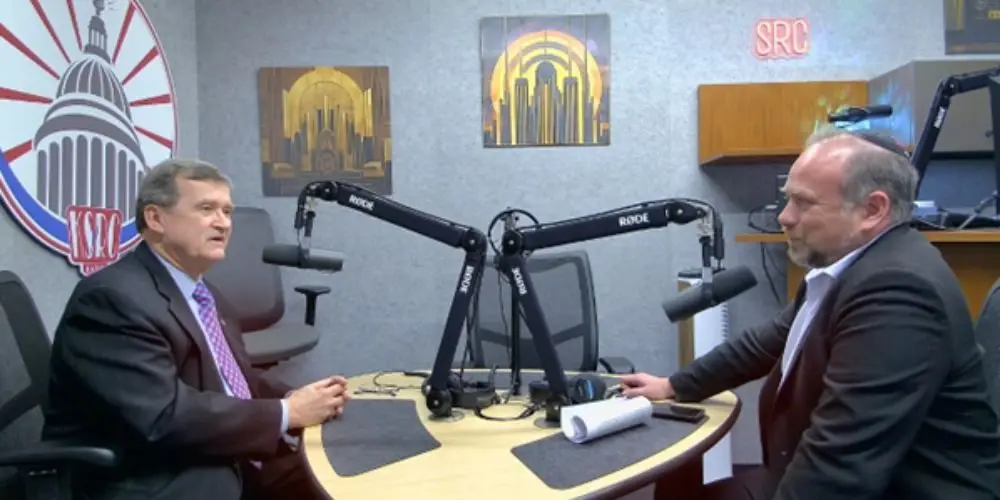
KVI host Ari Hoffman sat down with Sen. Curtis King, one of the Republican lawmakers backing Senate Bill 6176, legislation critics have dubbed the state’s latest “pay your tabs or else” proposal.
EXCLUSIVE INTERVIEW: Sen Curtis King defends “Pay Your Tabs or Else” bill
WA’s car-tab fees have sparked a tax revolt; an estimated 600,000 drivers refuse to renew their registrations to avoid taxes. A new bill would allow parked vehicles to be towed & drivers to be arrested. pic.twitter.com/8izBUO6oK7
— Ari Hoffman (@thehoffather) February 2, 2026
Hoffman opened the conversation bluntly, admitting his own car tabs are years out of date and arguing that rising fees—especially those tied to vehicle value and Sound Transit’s RTA taxes—have pushed compliance past the breaking point. “If you give me a ticket, I’ll actually save money,” Hoffman said, pointing to tab bills that can reach well into the four figures. “There’s no car under the sun that goes up in value unless it’s a collector’s car.”
King didn’t dispute the scale of the problem. He acknowledged that roughly 600,000 Washington residents have failed to renew their tabs, particularly in King, Pierce, and Snohomish counties, where Sound Transit charges often exceed the state’s base registration fees. In some cases, King said, annual tab bills can climb to $1,500 or $2,000, making it easy to understand why drivers choose not to pay.
But King framed SB 6176 less as punishment and more as a fairness issue. “There’s probably seven million people that pay their car tabs every year,” he said. “They do what the law says. And it’s not fair to them to let 600,000 people off the hook.”
According to King, the bill was prompted by a practical enforcement gap flagged by the Washington State Patrol. Under current law, officers can generally cite expired tabs only when a vehicle is actively being driven. That limitation, King argued, makes little sense when cars with expired registration are routinely parked on public streets, in grocery store lots, or along roadways.
SB 6176 would close that gap by allowing citations to be issued when a vehicle with expired registration is parked, standing, and unoccupied on public streets, public property, or certain paid private parking facilities. The citation would function like a parking ticket, issued to the registered owner rather than tied to a driving record.
The fines are intentionally higher than current penalties. Vehicles expired for two months or less would face a $145 fine, while those more than two months out of compliance would be fined $248. The bill also preserves existing authority to impound vehicles parked on public streets with expired registration for more than 45 days, escalating the consequences for long-term noncompliance.
Still, King acknowledged a key criticism of the bill: if fines remain lower than the cost of compliance, drivers may continue gambling on enforcement. He cited correspondence from municipal courts noting that drivers can currently resolve some tab violations for as little as $48 if they renew promptly—a system that effectively rewards delay when tab bills run into the thousands.
That economic dynamic mirrors what Hoffman repeatedly described as a textbook Laffer Curve problem—where taxes climb so high that revenue falls because people simply stop paying. Hoffman argued that lawmakers are responding to that breakdown not by lowering costs, but by increasing penalties, including potential jail time for certain violations.
While SB 6176 does not jail people for expired tabs alone, it does reaffirm that Washington residents who register vehicles out of state to evade taxes can face gross misdemeanor charges, punishable by up to 364 days in jail, mandatory fines, and repayment of delinquent fees. Hoffman argued that such penalties won’t solve the root problem when people feel boxed in by costs they view as unreasonable.
King said Republicans have raised those concerns repeatedly, but acknowledged political reality. “We’re not in the majority,” he said. Proposals to reduce tab costs or rein in Sound Transit have gone nowhere in a Legislature controlled by Democrats. King also pointed to the Climate Commitment Act, which he said has added as much as 80 cents to a dollar per gallon to gas prices, compounding the financial strain on drivers.
The interview also touched on uneven enforcement—particularly around homeless RVs and vehicles that remain parked for long periods without registration. King agreed enforcement has been inconsistent but maintained that imperfect enforcement doesn’t justify abandoning the law altogether.
As the discussion wrapped up, Hoffman pressed a final question: who will actually enforce the bill, given Washington’s shortage of police officers and reduced traffic stops? King pointed to targeted efforts by the Washington State Patrol, including teams assigned to identify Washington residents driving vehicles registered in Oregon, a practice he said has already been expanded into King County.
Despite acknowledging that tab costs have become “exorbitant in some cases,” King defended SB 6176 as a necessary response to widespread noncompliance. “If I can’t justify the bills that I put forth,” he said, “then I shouldn’t be here.”
For critics, that justification still misses the core issue. Voters approved a $30 car-tab cap through Initiative 976, only to see it struck down by the Washington State Supreme Court. With relief off the table and costs continuing to rise, SB 6176 signals the Legislature’s chosen path forward: not cheaper tabs—but tougher consequences for anyone who decides the price isn’t worth paying.