As public interest grows around alleged daycare fraud in Washington—what host Ari Hoffman calls “Minnesota-style fraud”—listeners are increasingly reaching out with tips, questions, and leads. But with the volume of speculation and the risk of misinformation, Hoffman says the public needs guidance on how to investigate responsibly.
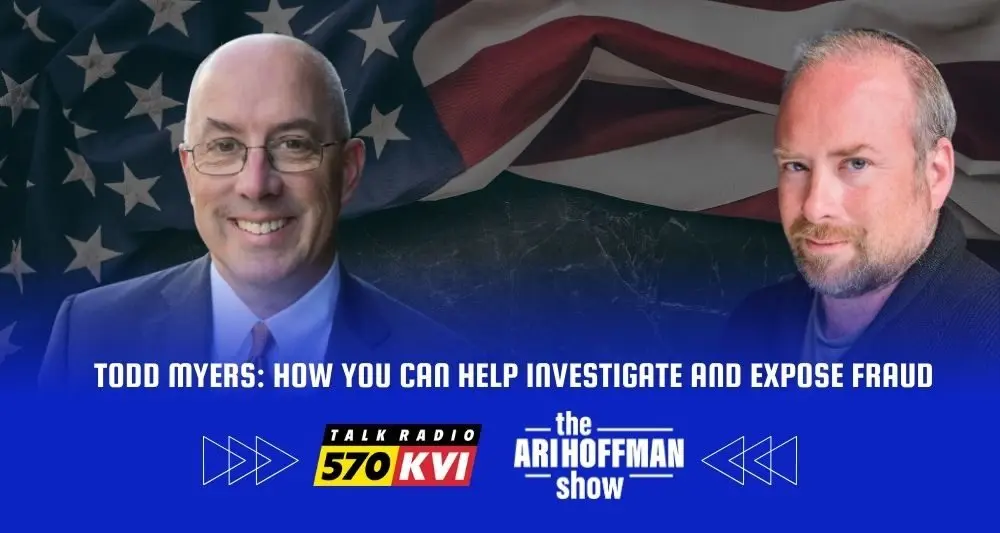
That’s why Hoffman invited Todd Myers, Vice President of Research at the Washington Policy Center, onto Talk Radio 570 KVI to break down a detailed thread Myers posted on X explaining how ordinary citizens can verify suspicious activity using Washington’s transparency tools.
The incredible fraud in Minnesota’s daycare program is leading many to wonder about fraud in Washington state government.
Based on my 25 years working with state government I have seen a fair amount and here is a guide citizens can use to find and identify fraud. 1/x 🧵#waleg pic.twitter.com/8XR8tjZRaQ— Todd Myers 🐟🌲🐝 (@WAPolicyGreen) December 30, 2025
Myers, a data-driven policy researcher, said many Washington residents want to help expose wrongdoing, but often approach it recklessly.
“People want to break stories quickly,” Myers said, “but there are tools to do it, and the problem with doing it wrong is that you can discredit the effort to find fraud.”
Washington’s “Checkbook” Makes Every Payment Searchable
Myers said Washington is uniquely positioned for public oversight because of its transparency laws and online records. One of the strongest tools, he said, is the Washington State Checkbook, which publicly lists state payments.
HOW YOU CAN HELP INVESTIGATE AND EXPOSE FRAUD IN WASHINGTON STATE
“People want to break stories quickly, but there are tools to do it, and the problem with doing it wrong is that you can discredit the effort to find fraud.”
-Todd Myers @WAPolicyGreen pic.twitter.com/rLLnQoZyYx— Ari Hoffman (@thehoffather) January 7, 2026
“Literally every payment Washington state makes is online,” Myers explained. “You can sort it by who the recipient is.”
That means if a daycare or nonprofit appears suspicious, citizens can check whether it has received large sums of government money, and identify patterns over time.
But Myers emphasized a key point: receiving government funds is not proof of fraud.
“Sometimes you have to put pieces together,” he said. “Just because an organization is getting money doesn’t mean they’re doing something nefarious.”
Public Records Requests: Powerful, Slow, and Worth It
The second major tool Myers recommended was filing a public disclosure request (Washington’s version of FOIA). While disclosure requests can take time, sometimes months, Myers said they are often the difference between suspicion and proof.
“You can ask for documents that exist,” he said. “By law, they basically have to turn over everything.”
Myers cited how strong the law is: if one person receives a document from the government, someone else can request that same document, and the government is required to comply.
Hoffman reinforced the long-game strategy, sharing his own experience where a disclosure request took years, but still had a major impact when it finally arrived.
Myers advised residents to keep their requests narrow and specific.
“If you say, ‘Give me every email for three months from all these people,’ it’s going to take a long time,” he said. “Ask specifically for what you want.”
Example: When Funding Paths Are Hidden
To illustrate why public records matter, Myers shared a case involving a Department of Transportation program aimed at helping truckers buy electric vehicles, worth $126 million. He said he requested contracts and discovered that money flowed through an out-of-state organization, and that a political advocacy group received funds indirectly.
A key takeaway: some recipients won’t appear in the State Checkbook, because the money may be routed through third-party contractors or out-of-state entities.
“So you have to be rigorous,” Myers said. “If you take information from the checkbook and disclosure requests, you can put the pieces together—and tell a more complete story.”
“Better to Be Right Than First”
Hoffman agreed, saying investigative work is about accuracy, not speed—especially when accusations can harm legitimate businesses and weaken public trust.
“One of my mentors said, ‘It’s better to be right than be first,’” Hoffman said, noting that early mistakes can “burn the effort” even when the larger story is real.
The segment ended with both men encouraging listeners to contribute responsibly: document concerns, use the tools available, and share credible leads with investigative journalists and watchdogs rather than relying on rumor.
This conversation follows ongoing reporting by independent journalists who have been investigating allegations of possible daycare fraud in Washington through door-to-door verification and public records.